

Britannia Results: The Shift from Biscuits to Premium Packaged Foods
- Share.Market
- 2 min read
- Published at : 13 May 2026 11:27 AM
- Modified at : 13 May 2026 12:04 PM


In the fast-moving consumer goods (FMCG) sector, revenue growth is common, but sustained margin expansion during geopolitical volatility is rare. Britannia Industries’ FY26 annual and Q4 results highlight a business in transition—moving from a volume-led biscuit manufacturer to a value-led packaged foods powerhouse.
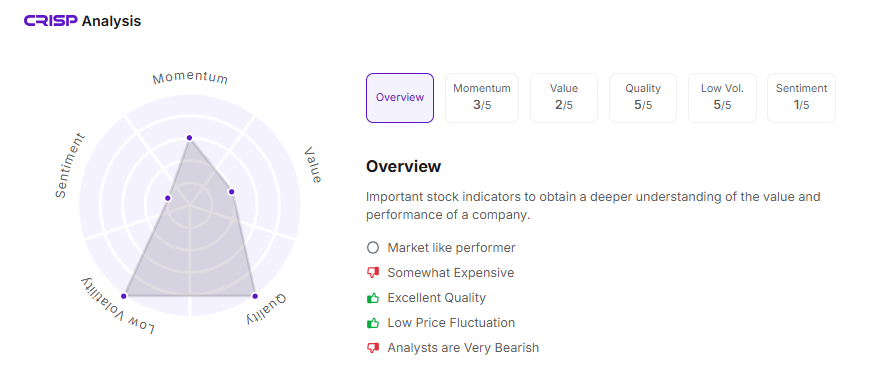
Britannia Industries‘ CRISP Analysis

Earnings
 BRITANNIA
For Q4 FY26, Britannia reported a consolidated revenue of ₹4,686 crore, representing a 7.1% YoY growth. However, the bottom line stole the show. Profit After Tax (PAT) surged by 21.1% to ₹678 crore, with PAT margins expanding to 14.5%. This discrepancy between top-line and bottom-line growth indicates significant operational efficiencies.
Key Performance Indicators (FY26 Full Year)
- Revenue: ₹18,858 Cr (Up 7.5%)
- Operating Profit: ₹3,208 Cr (Up 11.6%)
- PAT: ₹2,533 Cr (Up 16.3%)
The “Beyond Biscuits” Narrative
Britannia’s non-biscuit categories are scaling rapidly. Wafers and Dairy products delivered healthy double-digit growth, while the Cake and Rusk segments grew 1.4x faster than the biscuit category.
Furthermore, the “Premiumisation” strategy is yielding results. Signature brands—including NutriChoice, Milk Bikis, Good Day, and Treat—outpaced the broader portfolio by 3x. Innovation remains a catalyst; the 50-50 Cheeze Dipped cracker became the #2 player in its category within just 90 days of launch.
Digital and Operational Efficiency
One of the most striking data points is the digital shift. E-commerce contribution to domestic business has tripled, rising from 2% in FY22 to 6% in FY26. To combat commodity volatility, management focused on:
- Sourcing and logistics optimization.
- Packaging redesign and alternate fuels.
- Calibrated price increases (slated for Q1 FY27).
In Closing
While international business faced headwinds due to the West Asia conflict (higher freight and fuel costs), the domestic trajectory remains robust. As Britannia continues to optimize its cost structure and scale high-margin categories, it remains a pivotal case study in premiumisation within the Indian FMCG space.


