

DMart Result Review: 500-Store Milestone Reached, But Why Are Investors Cautious?
- Share.Market
- 3 min read
- Published at : 07 May 2026 01:06 PM
- Modified at : 07 May 2026 03:32 PM


Avenue Supermarts Ltd., the parent company of India’s leading discount retailer DMart, reported a steady top-line performance for the fiscal year ending March 2026. However, beneath the headline revenue of ₹66,968 crore, a shifting growth narrative has left Dalal Street analysts and investors weighing the trade-offs between aggressive expansion and margin preservation.
While the company posted a net profit of ₹3,224 crore, the market’s cautious reaction highlights concerns over moderating organic growth and a departure from DMart’s traditionally debt-averse balance sheet.
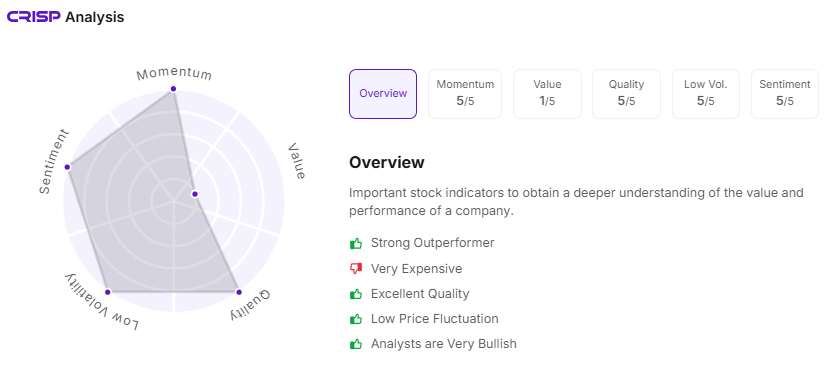
 DMART
DMART
The LFL Slowdown: Quality of Growth in Focus
The most significant data point emerging from the FY26 results is the Like-for-Like (LFL) growth. Traditionally a high-flyer in same-store sales, DMart saw its LFL growth moderate to 8.1%.
Historically, DMart’s valuation premium was driven by its ability to extract more value from existing aisles. The current deceleration suggests that the “easy growth” in older stores may be plateauing, forcing the company to pivot its strategy toward footprint expansion to maintain its momentum.
The Expansion Pivot
To counter the LFL moderation, DMart has hit the accelerator on new store openings. The company reached a landmark 500 stores this year, adding a record 85 outlets in FY26 alone.
Leveraging the Balance Sheet
For years, DMart was the poster child for self-funded growth. However, the aggressive push to 500 stores has required a shift in capital structure. Borrowings have increased, pushing the debt-to-equity ratio to 0.09.
While this level of leverage remains ultra-low compared to industry peers, the doubling of finance costs—rising from ₹69 crore to ₹142 crore—has begun to chip away at the bottom line. Profit After Tax (PAT) margins saw a slight compression, sliding to 4.8% from the previous 5.1%.
Quarterly Pressure and Outlook
The pressure was particularly visible in the sequential transition from Q3 to Q4. Profit Before Tax (PBT) dropped from ₹1,175 crore in the third quarter to ₹904 crore in the final quarter, signaling near-term headwinds in operating costs and perhaps the gestation period required for 85 new stores to become profitable.
The Bottom Line: DMart remains a powerhouse of Indian retail, but it is entering a “mature phase.” The transition from a high-LFL growth engine to a capital-intensive, expansion-led model is a structural shift. For long-term investors, the question is no longer whether DMart can grow, but whether it can do so without further diluting the lean margins that made it a market darling.


