Why On Earth Is A Railway Company Spearheading A Massive Internet Rollout in UP?
- Share.Market
- 5 min read
- 19 Jun 2026


If you look at the corporate world through a rigid lens, companies usually stay in their lanes. Car makers make cars, tech giants code software, and railway companies lay down steel tracks.
But every now and then, some information comes along that completely blurs these lines.
Recently, HFCL Ltd., a telecom equipment maker announced that it has bagged a massive contract worth ₹2,666.09 Crores to roll out the government’s BharatNet Phase-III project in the Uttar Pradesh (West) telecom circle.
The twist?
The client cutting this cheque isn’t a traditional telecom entity like BSNL or the Department of Telecommunications. It is Rail Vikas Nigam Ltd.(RVNL) a public sector undertaking under the Ministry of Railways.
Why on earth is a railway engineering company spearheading a massive rural internet rollout in UP? To understand this infrastructure crossover, we first need to look at who these two players actually are:
Historically, HFCL has been a premier telecom gear manufacturer. It makes everything from high-tech optical fiber cables (OFC) to Wi-Fi routers and 5G equipment. However, over the last few years, HFCL has been moving up the value chain. Instead of just selling boxes of cables, it is acting as a system integrator, meaning they design, build, and maintain entire digital networks from scratch.
On the other hand, RVNL is the construction muscle of the Indian Railways. Its bread-and-butter comes from executing mega fast-track transport projects. If the government needs to lay down a new high-speed rail line, double an existing track, build complex railway bridges, or set up major workshops, RVNL is usually the entity getting it done.
So, how did a builder of railway lines end up hiring a builder of telecom lines?
The Logic of Linear Infrastructure
The answer lies in how the Indian government has restructured its approach to massive national projects.
Historically, rural broadband initiatives like BharatNet faced crippling delays. Digging up thousands of kilometers of roads, managing local contractors, and securing state-level permissions proved to be an administrative nightmare for traditional telecom bodies.
To fix this in Phase-III, the government decided to shake things up by bringing in heavy-duty Project Management Consultants (PMCs) who excel at building linear infrastructure.
And who is better at managing linear infrastructure than a railway PSU?
Think about it. Building a railway network across a country and building an optical fiber network actually require nearly identical superpowers:
Heavy Project Execution: Managing thousands of field workers, navigating tough terrains, and managing massive supply chains across vast geographic expanses.
Right of Way (RoW): Railways already possess uninterrupted paths stretching across the country. They are master negotiators when it comes to handling land permissions, bureaucratic red tape, and state-level approvals.
By appointing RVNL to oversee the project, the government tapped into an engineering giant that treats laying thousands of kilometers of fiber cable just like laying down steel tracks. RVNL takes the master contract from the government, handles the high-level project management, and then subcontracts the highly specialized technical work to telecom experts like HFCL.
What’s in it for HFCL?
For HFCL, this setup is incredibly lucrative because it isn’t just a simple “supply and forget” transaction. The recent order is cleanly split into two distinct operational phases:
The Construction Phase (Capex): Worth ₹1,192.82 Crores. HFCL has a tight window of two years to supply the telecom gear, install it, and physically construct the Optical Fiber Cable network.
The Maintenance Phase (Opex): Worth ₹1,473.27 Crores. Once the cables are underground and active, HFCL enters a 10-year Operations & Maintenance (O&M) period (which includes a 1-year warranty) to keep the rural network humming.
This structure gives HFCL the best of both worlds, a quick bump in manufacturing revenue upfront, followed by a full decade of highly predictable, recurring cash flows to maintain the network.
What makes this deal even sweeter for HFCL is the geographical advantage.
RVNL had previously awarded HFCL a ₹2,167.65 Crore contract back on January 23, 2025, for BharatNet Phase-III projects across both the Uttar Pradesh (East) and Uttar Pradesh (West) circles.
By layering this new contract on top, HFCL is heavily consolidating its footprint in India’s most populous state. For an infrastructure player, managing adjacent regions is a massive win. It means they can reuse the same local supply hubs, share engineering teams, and generate much healthier profit margins through economies of scale.
The Bottom Line
The lines separating traditional industries are fast disappearing. As India races to get its rural heartland online, the government isn’t just relying on telecom operators anymore; it is weaponizing its heavy-duty railway builders to lay down the digital tracks of tomorrow.
By positioning itself right at the intersection of this crossover, HFCL is successfully transitioning from an equipment seller into a long-term keeper of India’s digital backbone, and ensuring its own financial runway remains clear for the next decade.
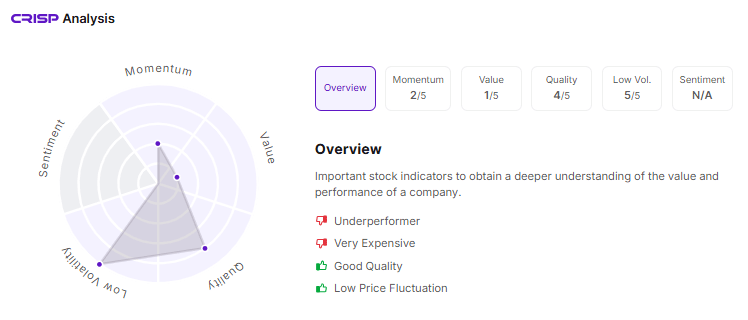
CRISP Analysis
 HFCL
HFCL
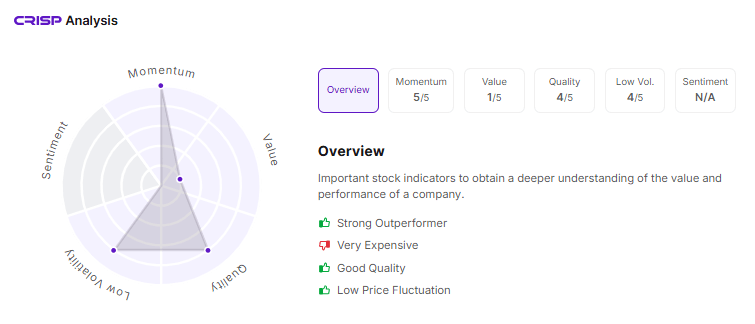
 RVNL
RVNL